If you skim the archives on this site, the story writes itself: a long quiet stretch after 2016, a small burst of life in 2023 when I got things out of a corner and into a BastilleBSD jail, and then another jump this year when the whole thing landed in Kubernetes. Yesterday—literally yesterday—the front page still looked like a different era: green bar, fixed layout, the whole “personal site from the late 2000s” vibe. Today it’s a new block theme, cleaner type, and a stack I’m not embarrassed to point people at.
None of that happened in a vacuum. I started building out my home cluster in earnest around mid-February of last year. For a long time that cluster didn’t exist—it was plans and YAML and late nights. Now there’s real infrastructure behind this place, and if you peek at the EhWS infra work you can see how fast that curve has been: from nothing to “this actually runs things I care about” in a pretty short window.
The recent redesign crunch was its own kind of sprint. A lot of it was me and Cursor in the same room—tight loops, “try this,” revert, try again—until the theme behaved: typography, sidebar, footer, the silly little details. The Kubernetes post wasn’t bragging; it was accurate. A big chunk of the migration and polish really was AI-assisted, in the sense that I was driving and the tool was doing the heavy typing and refactors. The performance bump isn’t magic; it’s what you get when you stop serving a blog off a single aging Atom box and move to something that isn’t fighting physics every request.
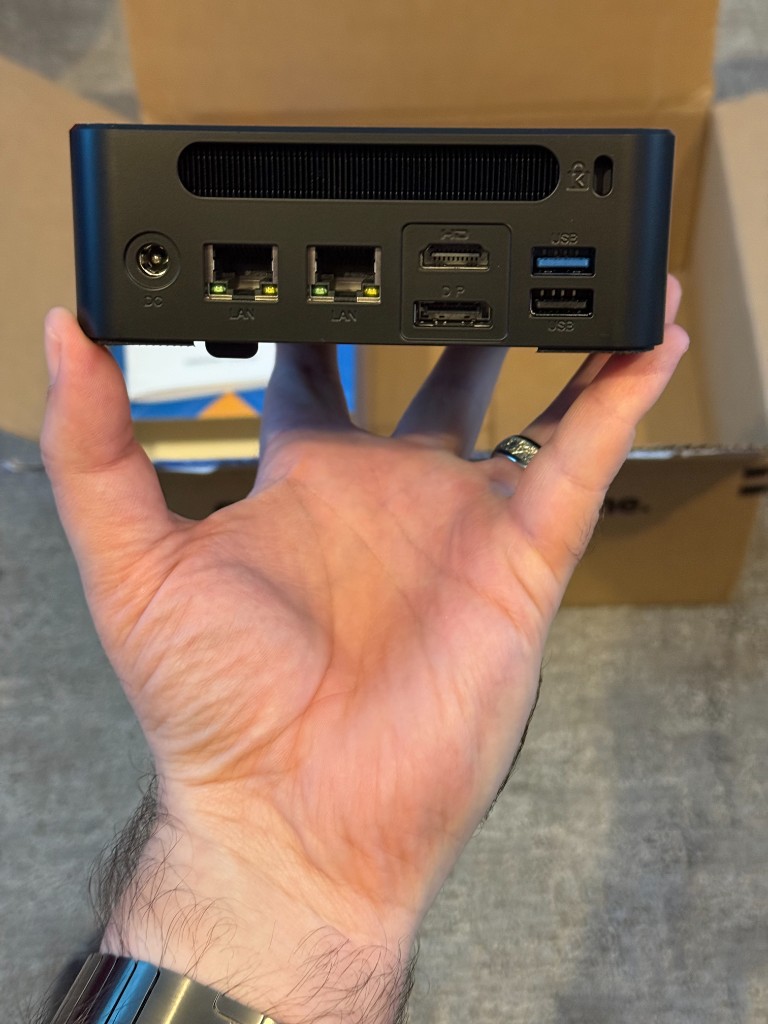
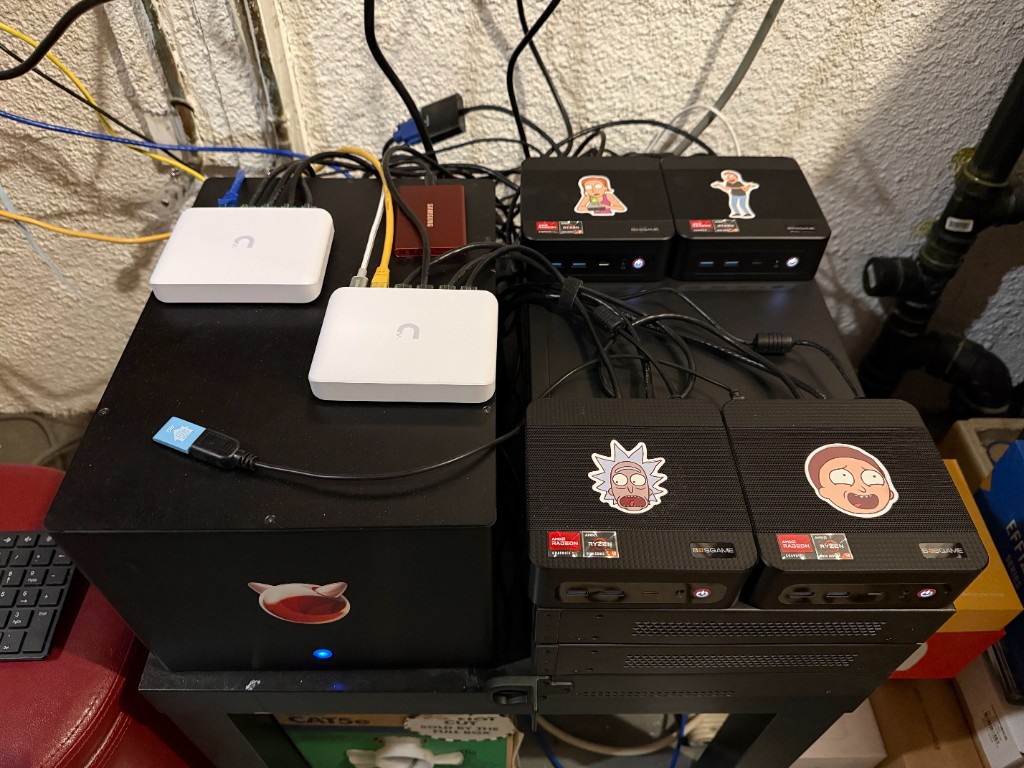
In 2012 I wrote about Inferno3—replacing an Athlon Thunderbird 850 MHz tower with a Super Micro Atom D525 mini-ITX board in a Fractal Design Array R2 case, mostly so I could shrink footprint and UPS load (from 17% down to 2% on the same UPS). That little Atom ran circles around the old T-Bird. Fast-forward to today: the home lab is four BOSGAME mini PCs (AMD Ryzen 7 5000 series, Radeon graphics on-chip), a pair of UniFi switches, and a rat’s nest of cables that looks like chaos but is my chaos—orders of magnitude more CPU (and actual GPU) than that Atom ever had, and nothing like the single-purpose box Inferno was. Inferno was the right trade for 2012; this is what “metal I control” looks like in 2026.
Why put energy into any of this when the whole world lives on apps and feeds?
I still believe in owning your own publishing, in self-hosting where it’s reasonable, and in a decentralized, messy, human-scale web—not everything routed through one company’s engagement graph. Social media isn’t neutral; a lot of it is built to amplify the worst incentives, and the cost to attention and civility is obvious. I’m not on a soapbox every day, but I care about data sovereignty in the plain sense: knowing where my stuff lives, who can read it, and what happens when a vendor changes the rules. We have to hold on to those options while we still have them—run our own sites, our own mail where we can, our own infra when it’s worth it—because every year the default drifts further toward “rent everything and trust us.”
This site is small, old, and mine. Keeping it that way is how I practice what I preach. If you’re still reading your own HTTP logs and caring about your own /—you’re not alone.
Meta: written with help from Cursor; blame me for the opinions.